Tuesday, May 10, 2016

👑 TOK Rules 👑


Here are some ideas that can be used to improve our clogs, however we should also be using these rules when we want to create a presentation or anylyze something with a TOK perspective.
These guidelines will help us as in TOK we always want to look at things in a way that differs from our normal perspective and one that allows us to look at the world in a different way. 
  1.  Incorporating ideas from class
  2. Areas of knowledge
  3. Looking at why something happens
  4. Understanding how something happens
  5. Looking at something and breaking it down
  6. Asking critical Questions
  7. Don't summarize
  8. Opinion is not part of TOK, but can be included at the end
  9. Ways of knowing
  10. Different perspectives
  11. Broad knowledge questions
  12. No pros or cons list
  13. Evaluate sources
  14. Causality
  15. Truth Claims


Thursday, April 28, 2016

Historians Write History

Where is Mao?

First I will briefly explain what the article talked about:

The article mentioned how they have changed the way the History textbooks in Shanghai are written. They wanted to promote a more peaceful version of history with less violence and one that has more relevance to the world we live in today.

Now I'll analyze the article with a TOK perspective:

The article I think relates a lot to what we mentioned in class about the ethical issues. The article mentions that they have decided to completely switch out the the textbook and leave them with the milder version, also leaving out many significant events that happen in History. As the article in some way criticizes the piece, I also would are that this is not the best way to protect kids. History is one of the areas of knowledge we studies in the beginning and it does explain a lot about the way people are and the way a certain group of people act. It lead to their personalities, which affect all of our ways of knowing (as mentioned in a previous post). I feel that it is understandable that the teachers want to protect their students, however i don't think rewriting or diminishing our world events is the way to do so. I personally would make the argument that it is not ethically correct, and present this knowledge question: To what extent is protecting someone actually beneficial?

This also reminds me of another Real Life Situation...
On our English exam we had an article about teachers starting to do 'trigger warnings'. So when something in class will be scary or a shocking look to reality, the teachers have to warn the students and they have the choice of attending school. ONce again it bring us back to my knowledge question. By hiding the truth are we really helping the students. Maybe presently, yes, however in the long run life doesn't come with warnings or sensors and maybe these students will be the ones most hurt in the end.

How Friends Ruin Memory: The Social Conformity Effect

First I will briefly explain what the article talked about:

The article talks about how we as humans always want our stories to sound intriguing and interesting and therefore we may misremember something or we may exaggerate the story so it sounds better. We can also implant memories to believe something happened to us when in fact it happened to someone else, however we heard the story enough to remember it.

Now I'll analyze the article with a TOK perspective:

I won't go too indepth on this idea because I talking about memory a lot befor and whether it is really reliable or not as a way of knowing. I would still argue that memory is not an accurate source and this article justifies my response perfectly. We don't remember things accurately and we can change and adapt our memories, so they don't necessarily tell or say the full truth. However, they do give us an insight of what happened at the times, they just are not always an accurate representation of a series of events. We  as humans want to claim to know things and look well, and therefore we exaggerate things that happened. Relating this to history, I think if we don't have an accurate memory and we don't really have control of what we know or claim to know we will adapt the story. This means that us humans could have easily adapted history and the way things happen to hopefully for in with what we would like to know... in a way relating to cognitive bias.

The Fall of Jonah Lehrer

First I will briefly explain what the article talked about:

The article here talks about an example of plagiarism or even self- plagiarism, describing the case of Jonah Lehrer.

Now I'll analyze the article with a TOK perspective:

In the first article above I talked about ethical issues, and I think this article portrays the same dilemma and rises the same question. Looking at it on both sides: First, I think he was wrong to plagiarize and copy his own work, however if he did write it, it's not plagiarism as it is an original text. Second, I understand that such a well known author did cause a scandal, but was it ethically right for everyone else to get involved and for this to turn into such a public scandal. Relating  this back to the history idea, I think it is interesting that such a well known author did such. However, I also don't think this means his work was inaccurate and therefore think no matter what he writes, it's a viable source.

This also reminds me of another Real Life Situation...

In IB we always learn to cite all our sources, and if we forget the source we are facing that our diploma gets taken away. I understand if we steal a whole essay this would be understandable, but if I forget to cite one source I do not see the harm in that and do not think the diploma should be taken away. However is something okay or not okay, and how do we classify these things? I think there should be punishment but to a certain extents and we therefore raising another knowledge question: To what extent is something acceptable?

Tuesday, April 26, 2016

Knowledge Questions - Week of April

Good Country Index

How do we decide the factors we chose?
To what extent can we rank things accurately?
When do we know we have enough data?To what extent is the Good Country's Index reliable?

Bad Historian
To what extent can we trust someone's knowledge about history?

Human Science- Amazing Babies:
How can we accurately test knowledge?
To what extent do species affect each other?
What is a fair test?

Friday, April 8, 2016

Stanford prison study

In class we watched a TED talk on the man who created the Stanford Prison study and were given the task of debating whether it was right or wrong. I was given to look at it in a positive light and so here is the evidence I used to support my claim.

Yes
  • It was effective as he used very powerful images, and there was clear evidence to the problem
  • He gave statistical data
  • Related it to other studies and cases
  • It was very clear
  • He is a primary source, however there was datas to support all his claims
  • He talked both about his fault in the experiment, but also the positive aspects of the experiment
  • He recognized what he did

Does it apply outside the lab?
  • Yes
    • We still see this behaviour outside 
    • We can see this in the past history how a uniform can change a person and affect their traits
    • We see how power affects people and how it can adjust our personalities
      • For ex. People who win the lotteries
    • People  can do wrong, but that cannot all be based of physiological reasoning
    • This idea of uniform, uniform is an identity and it what set you a status, and this is seen through the time and even today. A police officer when in uniform has very high power, but at the end of the day when the uniform comes off they are just one more person among many.

TOK 
In class we discussed the theme of ethical issues and we looked at it from different perspectives. First, the Stanford Prison experiment is a very  debatable issue as yes, we did get a lot of information from it, however it also cost the sanity of a few people. There is it really right to harm so many humans for the sake of a study? In addition, in class we also look at two viewpoint. Deontological view, and utilitarian view. I think deontologists would be against these trials as they are wrongful and present to many issues to make it okay or passable. However a Utilitarian perspective I believe would be the opposite. The prisoners were the minority and therefore that is why they don't really contribute to utilitarianism perspective Therefore, I think a utilitarians would be okay with the experiment because in the long run and with all the information derived from the experiments we were able to learn more about humans, their behaviours and their natural responses to circumstance.
Lastly, a bit of a personal connection, but I feel like this experiment and the guards taking the small roles and the prisoners taking smaller positions, reminded me of Theatre. We have dress rehearsals because a costume or suit changes you and this man proved just so, the suits made the guard feel superior.

Tuesday, April 5, 2016

Abortion


Deontological Thesis:


In many parts of the world abortion is legal depending on the 

circumstances of the patient.

Utilitarian Thesis:


Should be legal as it makes the patient happy as it allows them to feel free from the duty of a child.


Deontological View:

  • They always will state that we must do our duties, and our duties are not choices and decisions. 
  • "A ethicist coming from a deontological standpoint would certainly say that abortions are wrong, for two main reasons: it is the duty of a parent to care for their child, not abort it and that we should treat everyone as an ends in themselves, not a means to an ends".
  • Once a woman becomes pregnant the parents should be able to take responsibility and protect it. 
  • They have 3 views: 
    • That even if the baby is unborn it is still a human life
    • You should not take a humans life, and 
    • that is what abortion is

Utilitarian View:

  • They want to agree with the side that makes the most people happy
  • Generally they would agree that abortion is okay because it can bring the most happiness to the general public
    • The baby as it will not have to suffer through life
    • The parents so they don't have to live  and deal with the large responsibility of having a baby 
TOK

In class we discussed both the different views and perspective and therefore in this post I chose an ethical issue and looked at it from both perspectives. However this in some ways reminds me of a class discussion we had about History and Historians. Each person can look at something different have have strong opposing views which will cloud their clear judgment. The same thing applied to the historians that can interpret their finding differently and have different viewpoints on some unanswered or unclear questions that come up in History. These perspectives helpful as it gives us a wider picture of what we are talking about and in addition, it also allows us to look at the unbiased side of the argument. Bias, that was another TOK concept we discussed and it led us to question our knowledge up until now. However these multiple perspectives although alone stand as a very biased article, together they can show a wide array of peroples emmotions or feelsings about a specific topic.

Monday, April 4, 2016

Problems On Human Science


First, we must define what human science is and includes which is: 
  • Anthropology
  • Economics
  • Education
  • Geography
  • Archaeology
  • Law
  • Linguistics
  • Political Science
  • Psychology
  • Sociology

So what are the problems that come with human science...

 First, in TOK we often discuss the Ethical Issues that come with different testings. One example we studied thoroughly was the Stanford Prison Experiment. Although this does open much information about human behaviours, and the way they adapt to fit a certain role did this come at a very high cost of human sanity and almost turned into a tortured life for the prisoners during the experiment. It was not only a short term scare but there were long term effects, such as psychological problems and even some injuries or guilt. 
Next, we also studied the treatment of animals and the the ethical problems with animal testing. A large way to study human science is through experimenting. As humans themselves are animals, many scientist refer to animals as a way to test different questions about humans. However they do this because they think and devalue animal lives and believe that the human lives are more valuable to lose. Therefore this way of testing as a result, has led to many companies such, such as Lush, to fight against animal test, and many law and rules to be followed.
Next, we also discussed the problems with testing which is finding out the variables. One of the Knowledge questions we asked and discuss is How do we know which factors to test? With referring to the Human Science topic it is much harder as we have much we can test, much we want to find out and much we want to study. There are an endless possibilities we can test to learn more about the questions we want to answer. It is also extremley difficult because we can't make generalizations about all humans. We all have a different up bringing, a different environment, a different culture as a different way of responding to things. 
Previously we talked about emotions and whether we classify them as intelligence. However I think that as emotions are 'technically' part of the ways of knowing it can also be a great resource into testing some human behaviors and their response to a certain variable or event. 
Lastly, in class we talked a lot about Utilitarian and Deontological viewpoints. In these experimental cases I believe that a deontologists would say that if these test do harm to any species it is not right. However I believe a utilitarian would argue that it is fine as long as the population that is affected is small compared to the amount of people that learn from the results. Especially if the results, make them happier.


Friday, March 25, 2016

Why I don't eat meat


In 4th grade I made the decision to become vegetarian, so I've been following this diet for 7 year now. I had a bestfriend at the time who was also vegetarian and she started showing me all these video of how they kill the animals for the food, I use to eat. I started feeling guilty and terrible to eat these animals. I looked more into it, and what I found was honestly just so shocking to me. 

I am the only person in my house who is vegetarian, so it wasn't like I was following in the footsteps of a family member, it was a decision I chose to make myself and  because it corresponds with my beliefs and ideologies and view on the world and on life. We wouldn't kill a person for meat, but why is it okay that in some countries they eat dog, monkey brain or even the simplest such as the leg of a chicken? If human life is so valued, then why are animal lives so devalued?

I to this day stand by my decision of not only being vegetarian but my views which still remain the same, which is that animals should not be killed for food.

Many questions I have been ask through non-vegetarians are:

What about protein?
I still can get my protein through Tofu, broccoli and various other supplements, meat is not the only option.

Is it difficult?
Surprisingly, no it is not, many restaurants have a special logo on the menu and if there is no vegetarian option, servers are more than happy toto solve something for you.

Is anyone else in your family vegetarian?
No, but they understand my choice and respect it.

Do you miss meat?
I do not but that is because I have no clue of what it tastes like and at first it may be hard but soon after you get used to it very quickly.


TOK
In class we talked and discussed animal rights and some knowledge questions Mr Thomas presented to us. 
To what extent do animals have rights?
This question caused quite a bit of spark with the class but personally, I think animals don't have enough rights. First, there are multiple slaughterhouses, shelters for badly treated animals and this is all because of the cause of humans. However, we do have many laws to protect the animals, such as the types of domestic animals one can own, the volunteer vets that work with the endangered species. However, I do think this is only because humans feel responsible for the killings. We are the cause of the global climate change that's killed hundreds of Polar Bears in Antarctica, or the ones that hunt them for their skin and fur to make furniture and clothes. We humans think of our need primary and as these animals have no way of communicating with us when is it that we really know we are doing our best to give the animals the rights they need.  
How should we determine the proper treatment of animals?

This question n a way is similar to the above one, because there are so many sides and ways of looking at it (which is what a knowledge question is to allow us to do). However, this differs because it talks about a certain criteria. The other day in class we look at the Human Index, and discussed how do we come up with this criteria. However we base it of the needs of the animals, the way they live, the supplies, sources and protection they get. In determining this I feel like we would only know we had done an accurate way of testing our hypothesis if we see a population growth or decrease in a certain species in a controlled environment, however using different variable to test this.
How should we determine our obligations to animals?

This seems to be one of the harder questions to give one response to because every animal has different needs. However I think we would have to determine our obligations to them based on their way of living and how their species wants and needs to grow. We need to ensure that whatever we do to the animals it must not be harmful and must correspond to their natural way of being and behaving. Lastly, we need to keep in consideration that we must keep them secure and avoid them from getting extinct.
How should we determine which animals we take into consideration?
We ourselves are animals, therefore we primarily need to focus on the animals that balance our ecosystem such as bees or shard, because if not we as a species can go extinct. However the same way we take care of the main life suppliers, we need to take care of all animals and I believe we should not rank them rather each animals should have the care provided with the one they need.
What ethical issues are involved in eating meat?

I wrote about this TOK Knowledge question in my rgument to why I'm vegetarian.

Tuesday, March 1, 2016

Repressed memory Syndrome


Repressed memory Syndrome

She talks about how you can implant false memories in people's mind. This means they can replicate or imagine the situation which was implanted. Loftus, a psychologist who studies false memory drew and made many experiments to study why people misremember information. She began her study after Titarus' case- which was a man who was wrongly convicted of a crime he didn't do, and he went so psychologically crazy he began to believe all the information they had told him. She said there was a test in which they implanted traumatic memories and seeing if they would believe or act upon it. Soon after, most could recall the event and some people even had triggers in their mind. For example she implanted the memory that a person got sick eating a certain food as a child, and now in their adulthood they were starting to turn away from the food or lose their urge to eat it. However, there are ethical issues that come with implanting memories, such as if we should stop or if it's okay to put people under such circumstances. Nonetheless researchers do it because the information they gain out is more valuable than the persons memories at time.

The main point of the video was trying to say that memory is not necessarily reliable. For example psychologist can use false information, and others methods to influence the situations you remember.

TOK + Update - In my previous posts I talked a lot about Emotions and whether they are a trustable sources of knowing something. However now we look at another aspect of the different ways of knowing memory. In this post I explained an example of how memories can be falsified and how they might not be a reliable way of knowing. So why do we consider memory a way of knowing as it can be quite inaccurate? I think this is because memories, whether they happened to us or not can just show how powerful these aspects are in the way we perceive different things that haooened to us in life and how they can affect us. However, although this does change our perception, personally, I would not put memory as a way of knowing as it really does not fit the well rounded criteria for knowing something. Emotions for example are uncontrollable and they are a natural response, they can't be accurate. However as seen in this article memory does not always tell us what happened. Also, I remember in class we talked about the example of the witness' in a crime.Everyone at the location will remember something differently or even wrongfully, as they will make assumptions about what they saw and implant memory. 

Tuesday, February 23, 2016

Intelligence

Post prompt: To what extent should emotions be considered in our understanding of intelligence?

Emotional intelligence has many different definitions, and therefore makes it hard to truly define the word and whether it can be classified as something that makes up or contributes to emotions.  In the blog post previously written, I mentioned the problems in finding a definition and why this can affect the way we perceive different thing. However, the same thing applies here, how can we really decide upon a definition or a way to classify things and to what extent can we really decided whether what we believe is true. Nonetheless, this assumption is not enough to say that what we know is false. Therefore, I believe emotions can in one way emotions should be considered part of intelligence, however with the same concept as previously mentioned I also think we should keep into consideration the other side- emotions are not part of intelligence.

I believe that emotions could be considered an intelligence for multiple reasons. First of all, some dictionary definitions do support the claim. From my previous post you will be able to see an example of the definition. In addition, I believe we have emotions that we can't control and that can't really be explained otherwise. Sometimes emotions burst due to an expirence or to a moment in our lives, however, we don't or can barely control when they come or how they make us feel. Therefore they can only be supported through considering this as intelligence. Relating this further into TOK, in the beginning of the year we studied the ways of knowing and one of them was emotions. Therefore this could suggest that since we classify emotions as a way of knowing it must be unbiased, and it must be something that can not be adapted or changed, and therefore emotions should be classified as intelligence.

On the other hand, I do not think it should be classified as an intelligence. First of all, just like my counterclaim this also has definitions to support itself. Again, this can be read more in depth about in my previous blog. Also, emotions are a response and a reaction to a certain situation therefore it is not an intelligence as it is a human response. Emotions, are uncontrollable and came as a natural response. However intelligence and grow and can adapt based on what we learn and what we experience. So , intelligence is about learning and understanding. One one hand you do learn as you respond to situations through emotions, however the reactions you have are a natural responce, and you can't teach it to yourself. Also, questioning the claim I made previously about Emotions being a way of knowing, and if looking at it from this perspective would challenge this idea. Can we really claim to know something based on our feelings or way of being? If emotions are not part of intelligence, can they really be an accurate source for knowing something?

Can emotions be classified as intelligence?

Can emotions be classified as intelligence?


In class we focused on definitions and trying to find the one we believe to be most accurate. Therefore in this post I have decided on what I believe are two different definitions on the same word. This is an extremley interesting idea as it challenge our knowledge on topics we think we know so well. If a definition is not clear enough or can be interpreted in so many ways is there really ever one answer. It makes us think about the complexity of different aspects, even the most simple things which are definitions. It makes us question what we already know and makes us look at different sides of things.

So how do we know and decide upon a definition? Definitions are very hard to put together because they have to refer from being biased. They have to show a whole round picture and therefore the word choice is always to be decided upon with extreme caution. 
So relating this back to TOK how can we tell if something is unbiased, and if it is how do we know which is the correct version, how can we justify what we know or what we say to believe? The overarching TOK question: How do we know what we know? Again, this concept applies to the definitions how do we really know what something means, how do we know we have included the most important characteristic of a word in one sentence. How can we classify all the information we know to be accurate if the main concept we are talking about might not even have the correct definition. Therefore this post is an example of these problems as I found two contradicting definitions for the same words or for the same ideas.
No, emotion can't be classified as an intelligence: 😶😶😶😶😶
“. . . a quality that is intellectual and not emotional or moral: in measuring it we try to rule out the effects of the child’s zeal, interest, industry, and the like. Secondly, it denotes a general capacity, a capacity that enters into everything the child says or does or thinks; any want of ’intelligence’ will therefore be revealed to some degree in almost all that he attempts;” C. L. Burt [8]
Yes, emotion can be classified as an intelligence: 😊😭😤😍😱
 “Capacity for learning, reasoning, understanding, and similar forms of mental activity; aptitude in grasping truths, relationships, facts, meanings, etc.” Random House Unabridged Dictionary, 2006


Friday, February 12, 2016

Post-Purchase Rationalization


Post-Purchase Rationalization

What is it?
Post Purchase Realization is when one makes a decision to buy something but then after regrets it and tries to justify what they just did. It is in some way a period of second- guessing.

How do people try to justify it?
They try and look at the alternatives with cognitive bias and then they focus on the weakness of the alternative and the strength of the product they chose?

Where does it drive from?
Some researchers say it derives from "commitment, our psychological desire to stay consistent and avoid a state of cognitive dissonance" (io9)

To what extent does one feel PPR?
it depends on the purchase one has made - cost, importance and difficulty to make that decision

Tok Connection?
In class we discussed cognitive Bias and the idea of memory. I would argue that Post - Purchase realization may connect to the same two idea. First as already discussed cognitive bias is one of the reasons people justify their wrongful purchases. This is because they don't look at the negative aspect as they know it could make them feel guilty or make them worry about what they have just bought. However I also think this can relate to memory as one may try to think back of why they wanted this item, in which occasion in their past or future can they use what they have just purchased. This memory may relate also to cognitive bias as they would only think of the positive aspects, rather than looking at both sides. 

Personal Connection:
I definitively have had Post - Purchase Realization. I sometimes buy things and then realize I might have spent too much money on a certain item and regret it. However then I start trying to justify what I just bought and I think of all the times I could and will use it. It is also interesting now that I look back upon these purchases and actually study cognitive bias, as at the time I don't think of myself as being one sided or biased because I'm so focused on convincing myself of something.

Further Questions:
This idea of cognitive bias does lead me to thinking differently of many things. How do we really know what we know? What is all our knowledge and ideas are of use trying to convince our self of evidence or ideas. We said historians write history, however to what extent can this be justified. With the idea of bias, people can adapt and interpret information to fit their thought and their needs therefore is there really a way to decide on one aspect or on one idea?


Thursday, February 11, 2016

Melish Motors Prompt

Find examples from the Yale situation or the Mellish Motors situation that demonstrate how language, emotion and reason intertwine.


In situations that have happened in the recent years such as the Mellish Motoros situation, we have learned more about how language can affect one. Language is an extremely powerful way of communication and therefore the things you say can affect one emotionally. These emotions will usually trigger a way of response, this can be both negative or positive. 

In the Mellish Motors incident we can see how all language, emotion and reason intertwin. Mellish posted various signs that had some extremley sexist remarks on them. However some took the sign in an extreme manner.  His first sign read "Women are like snowflakes, they can't drive". When the sign was posted it was only supposed to be a harmless joke, or so says Mellish. He said that people should just have a small laugh and move on and did not think people would take it so seriously. However people such as Ling, took the language the sign displayed in a whole other direction. She "thinks there should be a common sense line of what's hateful and what's funny". She continued by posting a picture of the sign online to share her thoughts, and the sign sparked up a lot of emotions. People ranged from laughing at the sign to hating the company for posting the sign.Therefore, Mellish's post raised a lot of emotions and each person had their own reasons for what they thought the sign meant. 

In addition, another connection to the Mellish Motors incident was the facebook feud that happened between a couple of people. The first person started by saying he couldn't believe that some "don't see the harm in sexist joke". The next person said there was no harm in the sign, and so various more began to voice their opinions. This example does not have to be to explained to see how the language raised people's emotions and opinions. All this was raised on social media and each person began fighting with others reasoning. 

Although it may be hard to understand how emotion language and reason intertwin, when looking at it as a chain reaction, one can better understand their connection. When language becomes abusive, opinionated or harmful, this can trigger others emotions to eventually respond reasoning their arguments.


TOK + Update
In class we thoroughly discussed the way of knowing - emotions. However there are two more in which we didn't go to indepth on in class which is language and reason. I think that this post does arise in each of these different aspects. First, we have to look at each individually an with a critical view - which is what we do with overarching TOK questions. Emotions, I thoroughly talked about on my blog so I will summarize quickly the main points. We don't know if we classify emotions as intelligence because there is much evidence to support my claim, such as the definitions. Also there is no real or accurate way to test emotions as they are a natural response. Next, we will discuss language. Language is difficult to understand as it can be interpreted in different ways. Maybe one person understands another then what was meant. In addition there are various language barriers. We can't always find out the appropriate information as one might not speak the language. With language we in class looked at the animals and their way of communicating. However, this can be easily challenged as it is the people whom are teaching them the language and it's also the same people that interpret what they are trying to say. Lastly, reason. Reason is the one we least looked at in class. To reason I think connects to what we talked about in class- cognitive bias. It relates to the Post-Purchase Syndrome also mentioned on my blog. Maybe we are so settled on having a certain answer to something we can't look at the other side and we start to justify our results to convince us of what we want to believe or get as a result.
Relating all this information to this post. I would say all these things intertwine as they can and do form a person's opinion or knowledge on a subject. If one believes that this LANGUAGE or poster it offensive (EMOTION) it is because they have REASON to do so. However this is because they convinced themselves and they interpreted the sign in a way that strikes them as rude.

Friday, February 5, 2016

Political Correctness

Before getting into the post I do mention Political correctness (PC). Therefore here is a definition of the word: To be respectful of people's political idea or thoughts.

I rate his signs a 6/10 on a scale of one being not offensive to 10 being extremley offensive...
This is because I do see and respect the fact that he wants to voice his opinions and speak out in the way he feels it is appropriate to do so. However, on the other hand, I do  believe that there is a better way to do so and he should not being posting these types of posts for everyone to see. If this is his opinions, I think he can keep it to himself or post it with maybe some explained intentions. I just do not feel it is right to post such a sign with no explanation provided because to someone who just so happens to pass against the sign they may be easily hurt or offended. 


But apart from my opinion on the signs, the really question i should be answering and discussing is: What connection does this have with TOK?
First we studied emotions and weather they are an intelligence. In this example we see the power of emotions. We see that they do spark a large debate and that they can change based on the person's personality. Some people took the ifn in a humourous manner, however many were deeply offended by the comments made. In addition, I also think this post or sign did raise a lot of questions on what is really acceptable. In TOK we try to question and challenge ideas. This sign raised a lot of questions on what is really acceptable. Even if there is freedom of speech, should we really do so without taking others into consideration? Therefore, I think there is a certain boundary that should not be passed, however this does raise a new knowledge question: To what extent are our social behaviors acceptable?

Thursday, January 28, 2016

Is 'Emotional Intelligence' Real?

Is 'Emotional Intelligence' Real?
Main Points


  • The research out there isn't proving emotional intelligence to be a universal asset in careers or life and decision making.  Goleman hypothesizes that it is simply not predictive of the positive outcomes 
  • Benefits of emotional intelligence in college students - She fully expected a moderate, positive correlation between EI and academic GPA. But she found no such relationship.
  • “Who cares if emotional intelligence correlates with school success or not?” she noted. “That doesn’t matter. Because emotional intelligence is important to success in life after kids graduate.” This finding does matter, because it undermines the original theory.
  • Emotional intelligence was postulated to be an actual intelligence, on par with (or even superior to) other dimensions of intelligence, like abstract reasoning. Emotional intelligence wasn’t merely social skills ─ it was supposed to be manifest in the brain with cognitive components.
  • According to the theory, emotional intelligence was expected to modestly connect with traditional cognitive abilities.
  • Emotional intelligence may not be an “intelligence” after all, but rather just a fancy phrase for adept social skills.
  • Many schools have had emotional intelligence be taught in the classroom. But the hours at school are limited. Would you want your child’s school to cut back on math class so they can teach social skills?
  • Personally, I don't doubt that having adept social skills matters to success, especially outside school. But I'm not sure those skills aren't just gained over time, as a grown­up, from dealing with lots of types of people. And I'm not sure that this would be enough to claim them as an intelligence.

TOK 
On the blog I thoroughly described if emotions were part of intelligence so I won't continue repeating or going more in depth on my views. However this blog is different as it asks whether it even is real. In class we recently discussed Historians and they way they interpret information. It is almost the same thing here. We discussed so many different viewpoints for the same topic, I feel like I have an overarching view on the issues. This is useful as we talked about how a bias opinion can lead us to less understanding of a particular topic. Again, this type of thinking is very beneficial to real life as we always want to see the whole picture and understand all sides of the topic or problems. 
Going back to the question, is emotional intelligence real. Well once again there is no one sided answer because we don't really know what intelligence is as we have different definitions, therefore there is no way to answer this question, but as a TOK student I will make the argument that it is it emotions are an intelligence. However I do make this statement after having studied this question quite indepthly and and also I still keep in consideration the other side.

Emotions & Emotional Intelligence


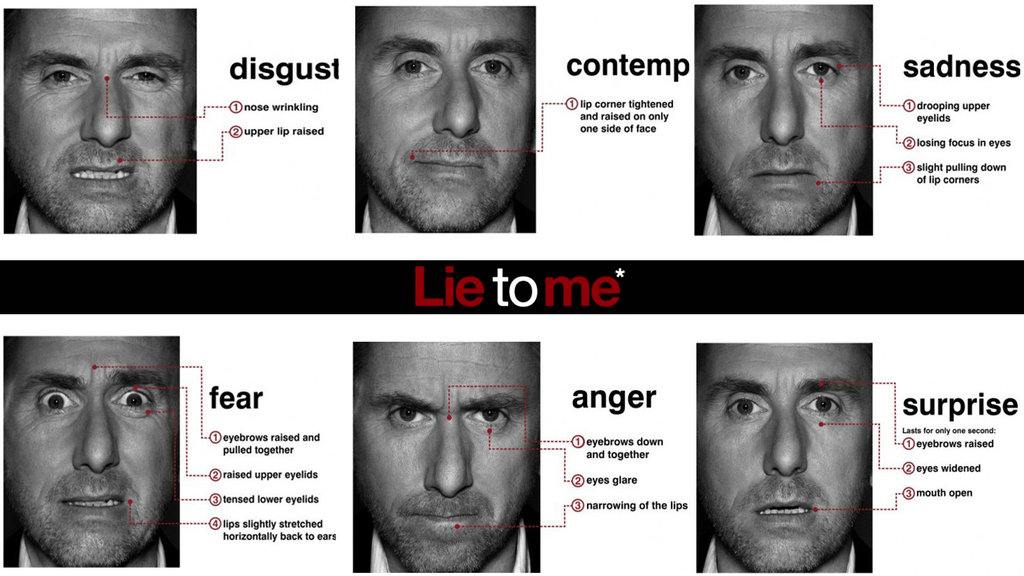
7 Basic emotions: 


  1. Joy
  2. Contempt
  3. Distress
  4. Fear
  5. Disgust
  6. Anger
  7. Surprise


7 Higher emotions? 

  1. Image result for Higher emotions?
  2. Shame
  3. Guilt
  4. Embarrassment
  5. Jealousy
  6. Envy
  7. Pride
  8. Love

Tuesday, January 26, 2016

Pinker Vs. Spelke

Spelke

Pinker

In class we debated two different people one who have different views on the question: 
A men and women different? Above are two links, which will refer you back to the main points we discussed in our debate. I was on the Pinker side, and my group decided to each take one or two paragraphs to break apart. However, in this blog post rather than restating what is already in the document I will first discuss my viewpoints on the topic, and then get into the TOK section and talk about the real life situations this can be correlated to.

Which one was better?
In this case I agree with Pinker that they are different, and this is not because of a biased mindset, rather I believe this through hearing both sides and thinking critically of the points presented. Pinker presented much numerical data, and had a better evidence to support his claims. In one presentation in class we talked about how numbers always make one feel more secure about the data they gathered. However it also makes it seem more believable than any other sort of information presented. Spelke also had one claim that felt extremley repetitive, and it was the only point Pinker couldn't debate against. Meanwhile Pinker also made many different claims, and uses much type of data to support everything.

TOK
We discussed a lot gender difference in class and the complexity of claims. Therefore this post is very helpful as it is the transition between gender and human sciences. First, the gender differences we discussed with the stereotyping.Therefore this post is further into what we were studying previously in class. In addition, I mentioned this a lot on my blog bias. I think both Spelke and Pinker made up their mind previously to how they wanted to look for information and therefore maybe they made their claims in a way where they were looking for the answer they hoped to find. This might also have a reason to do why the debate got so heated, because they couldn't change their views or mind sets on the problems presented as they were so biased to their sides.
In Real Life we see these debates happen all the time, not only gender related but with any sort of problem we may have. Sometimes these debates are with others and sometimes it's an internal problem. Nonetheless, we handle the situation similarly to the way we look at things in TOK: we evaluate both sides and question what we know.

Friday, January 22, 2016

Personality and Gender

Five elements of Personality

1. Neuroticism
2. Openness to experience
3. Conscientious
4. Extraversion
5. Agreeableness

TOK
In class we didn't go too much further or into detail on these elements of personality or what they mean. However we simply wrote them on our blog and I want to go further into looking at why these elements are important and what do they signify.
First, in TOK we always ask ourselves how do we know what we know? These elements of personality rise up the same question. How do we know these are the personality traits. I can not answer this question as I have never done intense research into the subject, however I can say it is through different experiments and tests. To me the more interesting knowledge question to be asking is: How can we decide which factors to test? and How do we know we have successfully identified all the factors?
Next it makes me question the ways of knowing in TOK. If everyone has a different personality, we can't make sweeping generalizations about what we know. It relates closely to the Melish Motors article. We all have a different opinion, reaction and upbringing and therefore each person will chose to react and behave in different ways. Therefore, if we all have different personalities that are what make up our ways of knowing, to what extent are those factors reliable? 
How does this relate to real life? Well this relates to today because we have so many different cultures and societies and it is unjust to say we have completely established our ways of knowing, because knowledge will expand and new cultures (and other factors) will emerge. These personality traits are what make up who we are and how we acts and behave, it is what separates us from being different. It is most importantly what forms our outlook on life and in TOK this is important because we need to get an overall picture and debate and question and think, and the more diverse the people are the more interesting our studies and finding become.

Saturday, January 16, 2016

Gender Communication

Although this topic was never focused on or mentioned in class, I decided to create a new blog post to connect the ideas of communication and gender, and see how they connect, as they are two major topics we have focused on in TOK.

How do different genders communicate?

I found an article: http://psychcentral.com/blog/archives/2012/04/01/6-ways-men-and-women-communicate-differently/ and here is a brief outline of everything I can remember and was mentioned in the article. This article is also based of various research and studies,

Men believe communication should have a purpose. 
Women believe communication is for sharing, building intimacy and a relationship

Men also say what has to be said and don't nesesarily ramble as much, they have a clear point to what they are saying, and he only says what is important.
Women communicates to explore and also organize her ideas. They are also looking for someone to listen and may begin to ramble as they do not always have a concise idea of what they are going to say in their head.

Men since they do communicate and talk less usually tend to listen more and can be more patient
Women on the other hand communicate more and tend to be worse listeners.

On a separate article I read about the body language: http://www.bodylanguageexpert.co.uk/bodylanguageandmenandwomen.html 
Men like to appear more dominant, and power, they are also worse at picking up on the opposite genders body signs. 

Women tend to be more nurturing and let their emotions come through, they can also communicate more with their body and pick up on body signs more. 

Where does all this root from or what explanation could be provided for this? Does enviroment play a role in this?
If we date back men and women always had very different roles in society. Women were stay at home, and took care of the children, while men were out in the fields working and trying to make a living. It was not until the Industrial Revolution that women were able to go out into a field and get a job, and once they did most of the women worked in clothing factories sewing clothes. Therefore I think this past leads up until today and can provide a explanation to why men and women communicate so differently. The men tend to only ask for the information because through evolution they have been repeatedly working and women are more talkative because they were brought up in their homes, allowing them to be more free to talk. Therefore, I do think that the enviroment has a large impact, however even now that women can do basically any profession, they will still keep the qualities they have had for centuries.

If so different how can they understand and communicate well with each other?
Women and men have larger difference not only verbally but also with body language. The reason they can understand each other so well is because humans were evolved in a way to communicate like so. Men became better listeners, because women became better talked. All their qualities can come or relate from the other. Men and women have also learned the social cues, and how to understand each other better. We have all learned to understand the other genders social cues and come to understand each other.

Friday, January 15, 2016

Gender Cultural Genes


Argument For Culture
Argument for Genetics
Dresses
Beard
Makeup
Breastfeeding
Jobs
Memories
Shaving Head
Illness – autism


What issues are raised by assuming gender differences are either biological or cultural?
There are various issues that can arise depending on the gender differences. First of all we start to have a specific idea of what a man or women should or should not be doing. When we discussing cultural differences or genetic between a man and a women, we are allowing for an excuse of gender stereotyping. As my precious post talked about having these gender stereotypes is what determine and mans/ women's place in society. If we did not believe that certain genders are the only ones that can do certain thing, our world might not be facing the issue of gender inequality. Above are some examples of how we categorize each person. Take makeup as an example. If a guy wear make up there is an obvious stereo type that he is gay, however for a women to do so it is completely normal. These types of thoughts arise several issues because if we continously separate men and women we can not get rid of gender stereotyping or gender inequality. Obviously, there are difference between both genders, however those difference should not effect each genders place in society, determine who they want to like, and have a effect on being and working to be whatever they would like.

The link below is a ton of pictures collected from the web, and they are how society views gender roles differently, in a more comic way. These pictures are also a prime example of gender stereotyping and can connect to genetic and cultural differences.

http://www.buzzfeed.com/pauljamez/the-difference-between-men-and-women-2kjh#.kyDOdK7Pj