Friday, February 5, 2016

Political Correctness

Before getting into the post I do mention Political correctness (PC). Therefore here is a definition of the word: To be respectful of people's political idea or thoughts.

I rate his signs a 6/10 on a scale of one being not offensive to 10 being extremley offensive...
This is because I do see and respect the fact that he wants to voice his opinions and speak out in the way he feels it is appropriate to do so. However, on the other hand, I do  believe that there is a better way to do so and he should not being posting these types of posts for everyone to see. If this is his opinions, I think he can keep it to himself or post it with maybe some explained intentions. I just do not feel it is right to post such a sign with no explanation provided because to someone who just so happens to pass against the sign they may be easily hurt or offended. 


But apart from my opinion on the signs, the really question i should be answering and discussing is: What connection does this have with TOK?
First we studied emotions and weather they are an intelligence. In this example we see the power of emotions. We see that they do spark a large debate and that they can change based on the person's personality. Some people took the ifn in a humourous manner, however many were deeply offended by the comments made. In addition, I also think this post or sign did raise a lot of questions on what is really acceptable. In TOK we try to question and challenge ideas. This sign raised a lot of questions on what is really acceptable. Even if there is freedom of speech, should we really do so without taking others into consideration? Therefore, I think there is a certain boundary that should not be passed, however this does raise a new knowledge question: To what extent are our social behaviors acceptable?

Thursday, January 28, 2016

Is 'Emotional Intelligence' Real?

Is 'Emotional Intelligence' Real?
Main Points


  • The research out there isn't proving emotional intelligence to be a universal asset in careers or life and decision making.  Goleman hypothesizes that it is simply not predictive of the positive outcomes 
  • Benefits of emotional intelligence in college students - She fully expected a moderate, positive correlation between EI and academic GPA. But she found no such relationship.
  • “Who cares if emotional intelligence correlates with school success or not?” she noted. “That doesn’t matter. Because emotional intelligence is important to success in life after kids graduate.” This finding does matter, because it undermines the original theory.
  • Emotional intelligence was postulated to be an actual intelligence, on par with (or even superior to) other dimensions of intelligence, like abstract reasoning. Emotional intelligence wasn’t merely social skills ─ it was supposed to be manifest in the brain with cognitive components.
  • According to the theory, emotional intelligence was expected to modestly connect with traditional cognitive abilities.
  • Emotional intelligence may not be an “intelligence” after all, but rather just a fancy phrase for adept social skills.
  • Many schools have had emotional intelligence be taught in the classroom. But the hours at school are limited. Would you want your child’s school to cut back on math class so they can teach social skills?
  • Personally, I don't doubt that having adept social skills matters to success, especially outside school. But I'm not sure those skills aren't just gained over time, as a grown­up, from dealing with lots of types of people. And I'm not sure that this would be enough to claim them as an intelligence.

TOK 
On the blog I thoroughly described if emotions were part of intelligence so I won't continue repeating or going more in depth on my views. However this blog is different as it asks whether it even is real. In class we recently discussed Historians and they way they interpret information. It is almost the same thing here. We discussed so many different viewpoints for the same topic, I feel like I have an overarching view on the issues. This is useful as we talked about how a bias opinion can lead us to less understanding of a particular topic. Again, this type of thinking is very beneficial to real life as we always want to see the whole picture and understand all sides of the topic or problems. 
Going back to the question, is emotional intelligence real. Well once again there is no one sided answer because we don't really know what intelligence is as we have different definitions, therefore there is no way to answer this question, but as a TOK student I will make the argument that it is it emotions are an intelligence. However I do make this statement after having studied this question quite indepthly and and also I still keep in consideration the other side.

Emotions & Emotional Intelligence


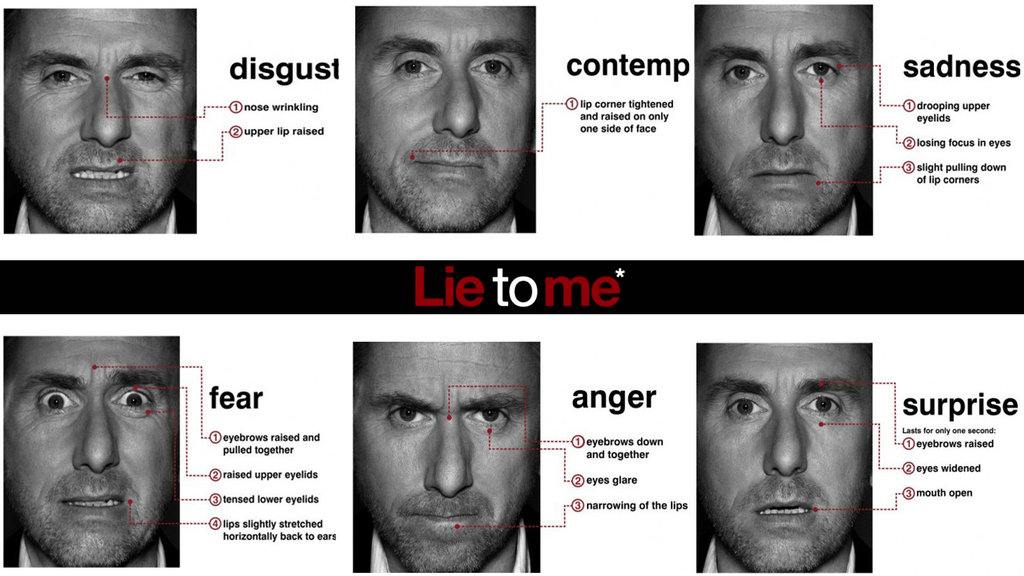
7 Basic emotions: 


  1. Joy
  2. Contempt
  3. Distress
  4. Fear
  5. Disgust
  6. Anger
  7. Surprise


7 Higher emotions? 

  1. Image result for Higher emotions?
  2. Shame
  3. Guilt
  4. Embarrassment
  5. Jealousy
  6. Envy
  7. Pride
  8. Love

Tuesday, January 26, 2016

Pinker Vs. Spelke

Spelke

Pinker

In class we debated two different people one who have different views on the question: 
A men and women different? Above are two links, which will refer you back to the main points we discussed in our debate. I was on the Pinker side, and my group decided to each take one or two paragraphs to break apart. However, in this blog post rather than restating what is already in the document I will first discuss my viewpoints on the topic, and then get into the TOK section and talk about the real life situations this can be correlated to.

Which one was better?
In this case I agree with Pinker that they are different, and this is not because of a biased mindset, rather I believe this through hearing both sides and thinking critically of the points presented. Pinker presented much numerical data, and had a better evidence to support his claims. In one presentation in class we talked about how numbers always make one feel more secure about the data they gathered. However it also makes it seem more believable than any other sort of information presented. Spelke also had one claim that felt extremley repetitive, and it was the only point Pinker couldn't debate against. Meanwhile Pinker also made many different claims, and uses much type of data to support everything.

TOK
We discussed a lot gender difference in class and the complexity of claims. Therefore this post is very helpful as it is the transition between gender and human sciences. First, the gender differences we discussed with the stereotyping.Therefore this post is further into what we were studying previously in class. In addition, I mentioned this a lot on my blog bias. I think both Spelke and Pinker made up their mind previously to how they wanted to look for information and therefore maybe they made their claims in a way where they were looking for the answer they hoped to find. This might also have a reason to do why the debate got so heated, because they couldn't change their views or mind sets on the problems presented as they were so biased to their sides.
In Real Life we see these debates happen all the time, not only gender related but with any sort of problem we may have. Sometimes these debates are with others and sometimes it's an internal problem. Nonetheless, we handle the situation similarly to the way we look at things in TOK: we evaluate both sides and question what we know.

Friday, January 22, 2016

Personality and Gender

Five elements of Personality

1. Neuroticism
2. Openness to experience
3. Conscientious
4. Extraversion
5. Agreeableness

TOK
In class we didn't go too much further or into detail on these elements of personality or what they mean. However we simply wrote them on our blog and I want to go further into looking at why these elements are important and what do they signify.
First, in TOK we always ask ourselves how do we know what we know? These elements of personality rise up the same question. How do we know these are the personality traits. I can not answer this question as I have never done intense research into the subject, however I can say it is through different experiments and tests. To me the more interesting knowledge question to be asking is: How can we decide which factors to test? and How do we know we have successfully identified all the factors?
Next it makes me question the ways of knowing in TOK. If everyone has a different personality, we can't make sweeping generalizations about what we know. It relates closely to the Melish Motors article. We all have a different opinion, reaction and upbringing and therefore each person will chose to react and behave in different ways. Therefore, if we all have different personalities that are what make up our ways of knowing, to what extent are those factors reliable? 
How does this relate to real life? Well this relates to today because we have so many different cultures and societies and it is unjust to say we have completely established our ways of knowing, because knowledge will expand and new cultures (and other factors) will emerge. These personality traits are what make up who we are and how we acts and behave, it is what separates us from being different. It is most importantly what forms our outlook on life and in TOK this is important because we need to get an overall picture and debate and question and think, and the more diverse the people are the more interesting our studies and finding become.

Saturday, January 16, 2016

Gender Communication

Although this topic was never focused on or mentioned in class, I decided to create a new blog post to connect the ideas of communication and gender, and see how they connect, as they are two major topics we have focused on in TOK.

How do different genders communicate?

I found an article: http://psychcentral.com/blog/archives/2012/04/01/6-ways-men-and-women-communicate-differently/ and here is a brief outline of everything I can remember and was mentioned in the article. This article is also based of various research and studies,

Men believe communication should have a purpose. 
Women believe communication is for sharing, building intimacy and a relationship

Men also say what has to be said and don't nesesarily ramble as much, they have a clear point to what they are saying, and he only says what is important.
Women communicates to explore and also organize her ideas. They are also looking for someone to listen and may begin to ramble as they do not always have a concise idea of what they are going to say in their head.

Men since they do communicate and talk less usually tend to listen more and can be more patient
Women on the other hand communicate more and tend to be worse listeners.

On a separate article I read about the body language: http://www.bodylanguageexpert.co.uk/bodylanguageandmenandwomen.html 
Men like to appear more dominant, and power, they are also worse at picking up on the opposite genders body signs. 

Women tend to be more nurturing and let their emotions come through, they can also communicate more with their body and pick up on body signs more. 

Where does all this root from or what explanation could be provided for this? Does enviroment play a role in this?
If we date back men and women always had very different roles in society. Women were stay at home, and took care of the children, while men were out in the fields working and trying to make a living. It was not until the Industrial Revolution that women were able to go out into a field and get a job, and once they did most of the women worked in clothing factories sewing clothes. Therefore I think this past leads up until today and can provide a explanation to why men and women communicate so differently. The men tend to only ask for the information because through evolution they have been repeatedly working and women are more talkative because they were brought up in their homes, allowing them to be more free to talk. Therefore, I do think that the enviroment has a large impact, however even now that women can do basically any profession, they will still keep the qualities they have had for centuries.

If so different how can they understand and communicate well with each other?
Women and men have larger difference not only verbally but also with body language. The reason they can understand each other so well is because humans were evolved in a way to communicate like so. Men became better listeners, because women became better talked. All their qualities can come or relate from the other. Men and women have also learned the social cues, and how to understand each other better. We have all learned to understand the other genders social cues and come to understand each other.

Friday, January 15, 2016

Gender Cultural Genes


Argument For Culture
Argument for Genetics
Dresses
Beard
Makeup
Breastfeeding
Jobs
Memories
Shaving Head
Illness – autism


What issues are raised by assuming gender differences are either biological or cultural?
There are various issues that can arise depending on the gender differences. First of all we start to have a specific idea of what a man or women should or should not be doing. When we discussing cultural differences or genetic between a man and a women, we are allowing for an excuse of gender stereotyping. As my precious post talked about having these gender stereotypes is what determine and mans/ women's place in society. If we did not believe that certain genders are the only ones that can do certain thing, our world might not be facing the issue of gender inequality. Above are some examples of how we categorize each person. Take makeup as an example. If a guy wear make up there is an obvious stereo type that he is gay, however for a women to do so it is completely normal. These types of thoughts arise several issues because if we continously separate men and women we can not get rid of gender stereotyping or gender inequality. Obviously, there are difference between both genders, however those difference should not effect each genders place in society, determine who they want to like, and have a effect on being and working to be whatever they would like.

The link below is a ton of pictures collected from the web, and they are how society views gender roles differently, in a more comic way. These pictures are also a prime example of gender stereotyping and can connect to genetic and cultural differences.

http://www.buzzfeed.com/pauljamez/the-difference-between-men-and-women-2kjh#.kyDOdK7Pj